Labcorp
Peptide Therapeutic Biomarker Panel
Peptide Therapeutic Biomarker Panel
Couldn't load pickup availability
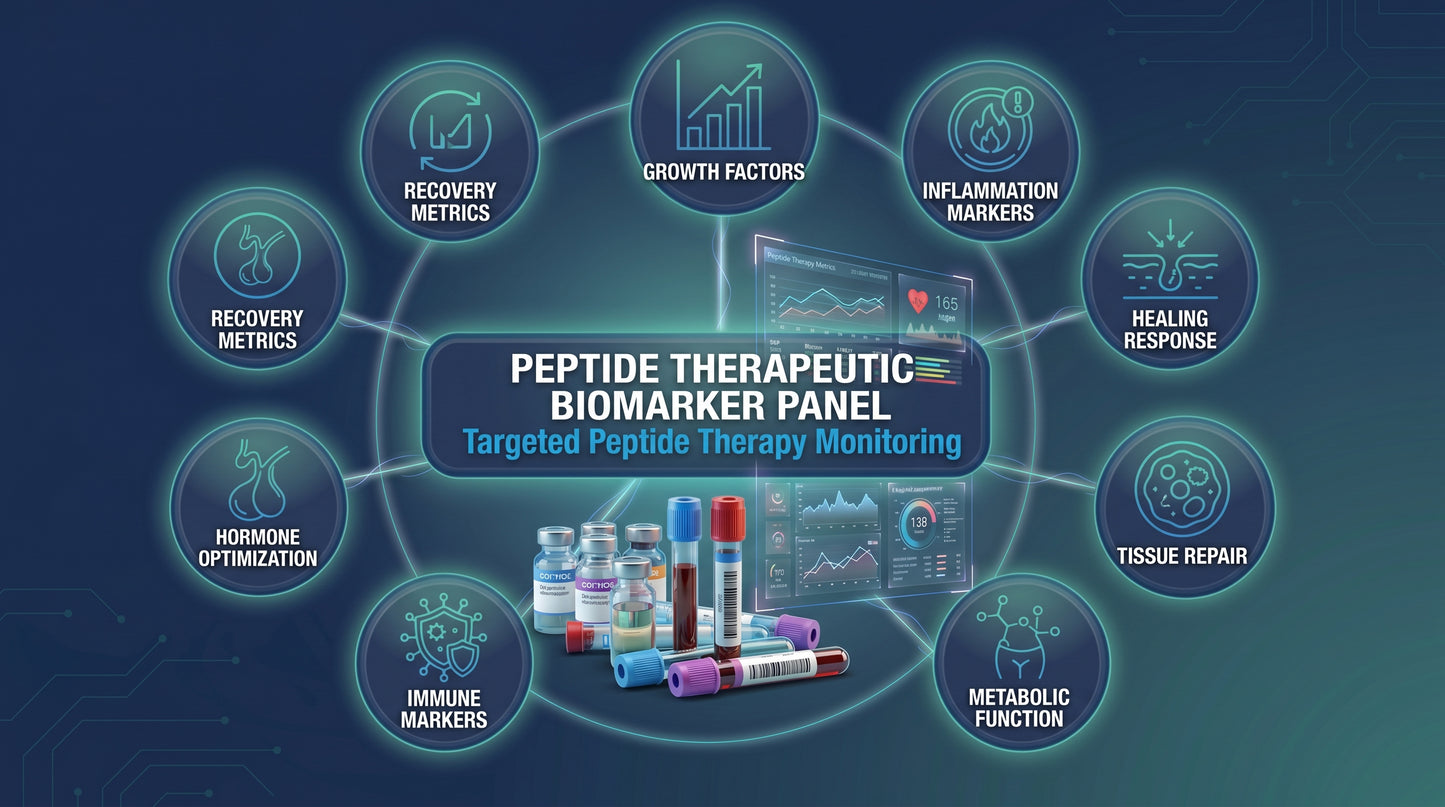
Peptide therapy works at the intersection of metabolism, inflammation, and cellular signaling. To use it well, you need to see what it's doing inside the body, not just how you feel on the outside. The Peptide Therapeutic Biomarker Panel gives you and your clinician the foundational data to evaluate both safety and response across the most commonly prescribed peptide protocols.
This panel measures the systems peptides act on most directly: glucose regulation, lipid metabolism, organ function, growth axis signaling, and systemic inflammation. Whether you're using a growth hormone secretagogue, a GLP-1 receptor agonist, a tissue repair peptide, or an immune-modulating compound, these markers establish your baseline and track meaningful change over time.
What's included
Metabolic & glycemic control
- Comprehensive Metabolic Panel (CMP)
- Fasting insulin
- Fasting glucose
- HbA1c
- Lipid panel with ApoB
Growth axis
- IGF-1
- Human Growth Hormone
- Cortisol
Inflammation & hematology
- hs-CRP
- Complete Blood Count (CBC) with differential
Why these markers
Peptides exert powerful effects on insulin sensitivity, the growth hormone axis, and inflammatory tone. IGF-1 and IGFBP-3 track growth axis response when using secretagogues like ipamorelin, CJC-1295, or tesamorelin. Fasting insulin, glucose, HbA1c, and a full lipid panel with ApoB capture the metabolic changes driven by GLP-1 agonists and the insulin resistance that can emerge with certain GH-promoting peptides. The CMP monitors kidney and liver function as your body processes these therapies. hs-CRP and CBC round out the picture, giving your clinician the context to make precise, data-informed adjustments.
Who this is for
Anyone starting, optimizing, or maintaining a peptide protocol. We recommend testing at baseline, again at 8 to 12 weeks after initiation, and every 3 to 6 months thereafter for ongoing protocols.
Share